

Benefits of Drinking High Elevation Coffee
Table of Contents
- What Makes High Elevation Coffee Different
- High-Altitude Coffee vs. Low-Altitude Coffee: Flavor, Density, and Quality
- Does High-Altitude Coffee Have More Caffeine? What the Evidence Shows
- Best Way to Brew High-Altitude Coffee
- How to Identify High-Elevation Coffee
- Frequently Asked Questions
Last Updated: October 9, 2026
What Makes High Elevation Coffee Different
High elevation coffee grows where cooler temperatures and slower cherry maturation produce denser beans and more concentrated flavor. At Mike's Coffee, we source specialty-grade beans from high-elevation estates because altitude is one of the clearest markers of quality in the cup.
Three growing conditions separate high-elevation coffee from everything grown lower down: cooler temperatures slow cherry development and concentrate sugars, slower maturation produces denser beans with tighter cell structure, and volcanic soil at elevation holds mineral content that shows up in the cup.
High-Altitude Coffee vs. Low-Altitude Coffee: Flavor, Density, and Quality
High-altitude coffee vs. low-altitude coffee comes down to density. Denser beans roast more evenly, resist channeling better, and extract with more clarity.
The differences show up in predictable ways:
| Factor | High-Altitude Coffee | Low-Altitude Coffee |
|---|---|---|
| Bean density | Dense, tight cell structure | Porous, lighter |
| Flavor | Bright acidity, layered sweetness | Muted, flatter |
| Maturation | Slow, cooler temperatures | Fast, warmer temperatures |
| Roast behavior | Even development | Prone to uneven roasting |
Density is also why high-elevation coffee flavor reads as more complex: a dense bean holds its structure through brewing, so grind size behaves consistently.
Does High-Altitude Coffee Have More Caffeine? What the Evidence Shows
The honest answer: altitude does not reliably increase caffeine content. Caffeine is primarily a genetic trait of the plant.
What actually moves caffeine in your cup: brewing method, grind size (a fine grind extracts faster and more completely), and dose and ratio. If you want a stronger cup, adjust the brew, not the origin story.
Best Way to Brew High-Altitude Coffee
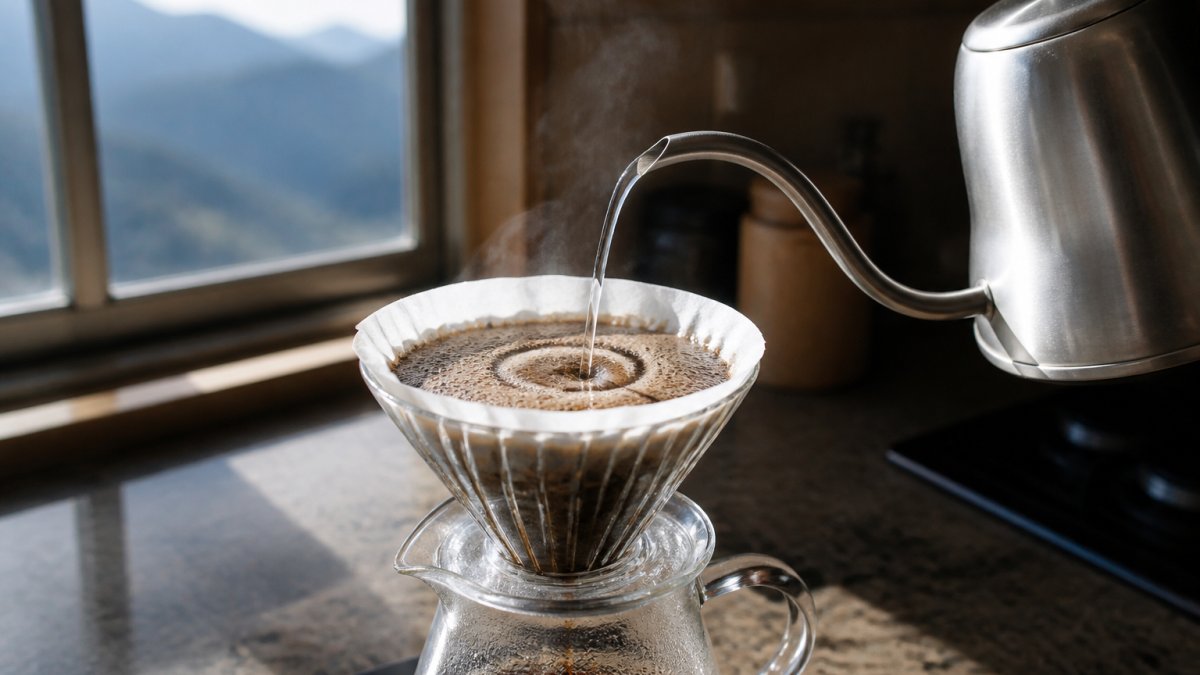
The best way to brew high-altitude coffee is to respect its density: dense beans need a slightly finer grind and more contact time.
A simple starting point: grind slightly finer than for a porous bean, use a 1:16 coffee-to-water ratio, keep water between 195°F and 205°F, watch for channeling, and taste before adjusting grind.
Single Origin Favorites Sample Pack →
Coming from mass-produced coffee, expect the first cup to taste sharper. That brightness is the point, not a flaw.
How to Identify High-Elevation Coffee
Altitude is usually printed on the bag in meters; if a roaster does not state it, ask. Look for a stated altitude range, named regions and estates, and roasted-to-order beans over warehouse stock.
Our Single Origin Favorites Sample Pack spans estates from 750 to 1,900 meters, an easy way to taste how altitude changes a cup side by side.

Frequently Asked Questions
Does high-elevation coffee have more caffeine?
Research does not show that high elevation coffee has more caffeine than coffee grown at lower altitudes. Caffeine content is primarily determined by the coffee species (Arabica vs. Robusta) and brewing variables like grind size, water temperature, and ratio. High-altitude Arabica beans may have slightly different concentrations due to slower maturation, but the difference is not significant enough to rely on for a caffeine boost. If you want more caffeine, adjust your brewing method rather than the elevation of your beans.
Is high-elevation coffee healthier than coffee grown at lower elevations?
High elevation coffee may contain slightly higher levels of antioxidants due to the stress of cooler temperatures and slower cherry development, but research specific to elevation is limited. General coffee health benefits, such as antioxidant protection and support for brain function, apply to most coffee. The more reliable health factors are how the beans are processed and how you brew them.
How should you brew high-elevation coffee to bring out its flavor?
High elevation coffee often has a denser bean structure, so start with a slightly finer grind than you would for lower-altitude beans. Use a brewing method that highlights clarity and acidity, such as pour-over or drip, with water just off the boil (around 200°F). A ratio of 1:16 coffee to water works well. If you notice channeling or a weak cup, adjust the grind finer. For espresso, expect to grind finer and possibly increase the dose slightly to compensate for density.
Why does coffee grown at high elevations taste different?
Coffee grown at high elevations matures more slowly because of cooler temperatures. This slower development allows sugars and acids to concentrate in the bean, resulting in a denser bean with more complex flavor notes like fruit, chocolate, and floral tones. Volcanic soil, common in high-altitude regions, also adds minerals that influence flavor. The combination of slower maturation and soil composition gives high elevation coffee its distinct brightness and depth compared to lower-grown beans.
Altitude is a growing condition, not a caffeine shortcut, and the real payoff shows up in density, clarity, and flavor. If you want coffee built around high-elevation sourcing, Mike's Coffee roasts specialty-grade beans to order with small-batch precision. Start with our single-origin selections and taste the difference for yourself.